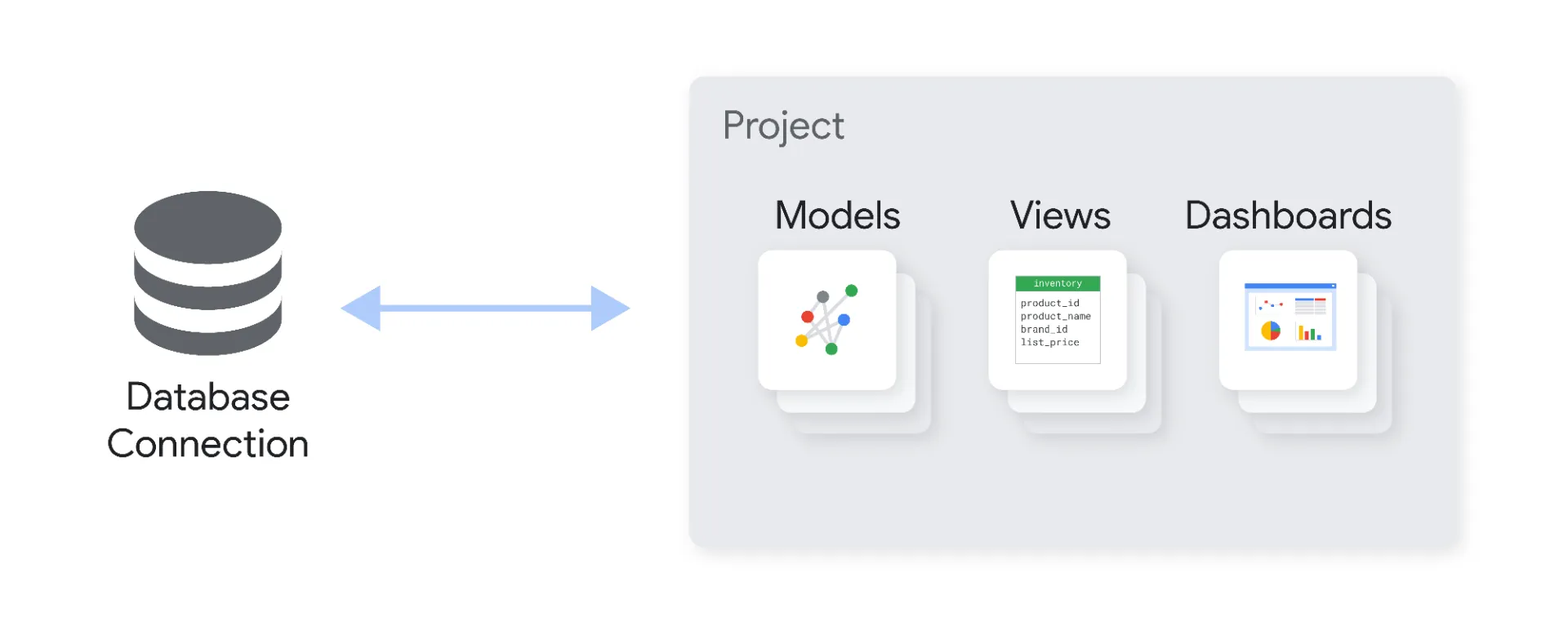
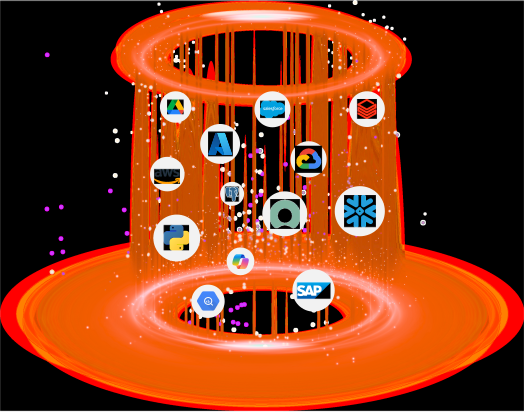
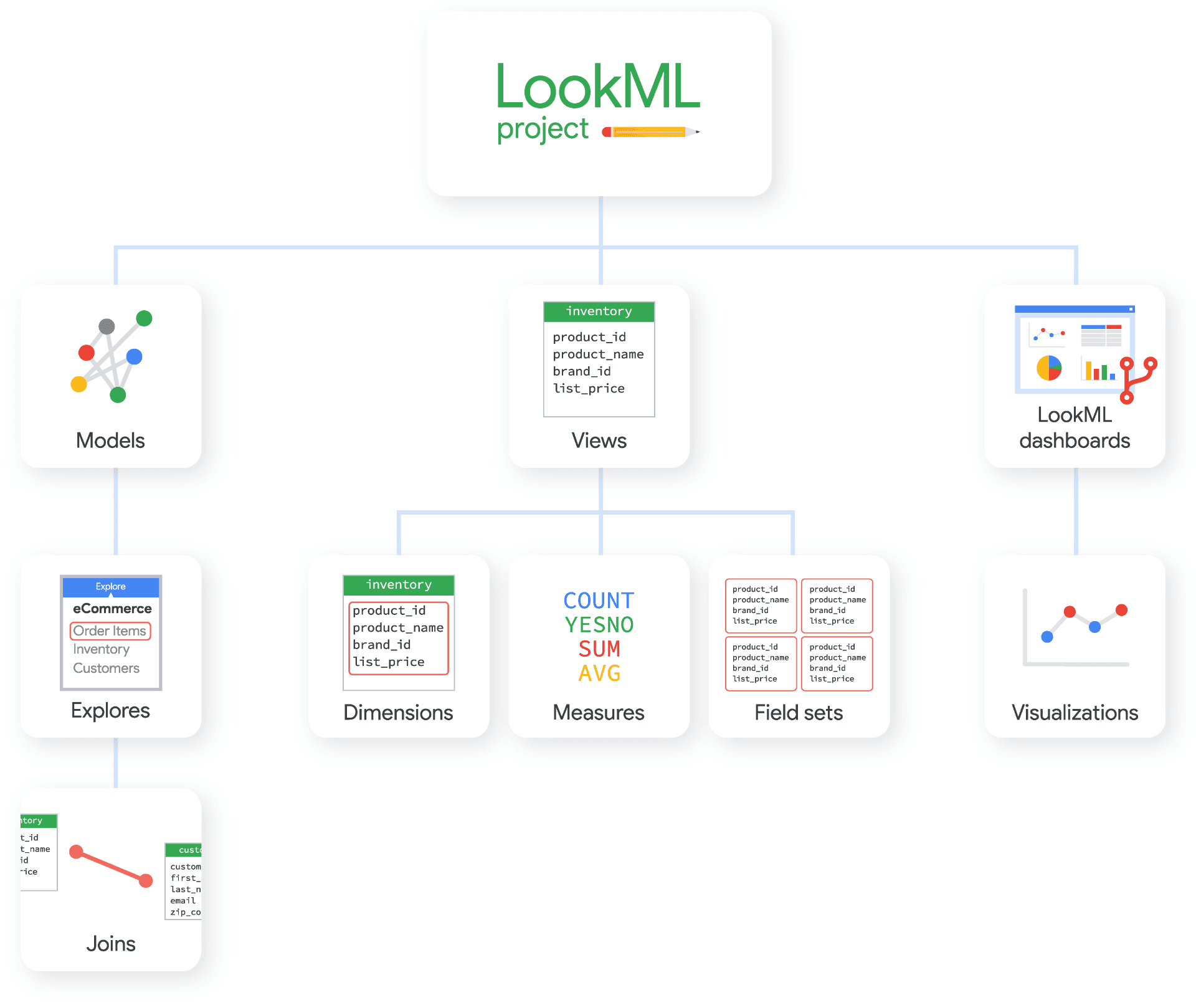
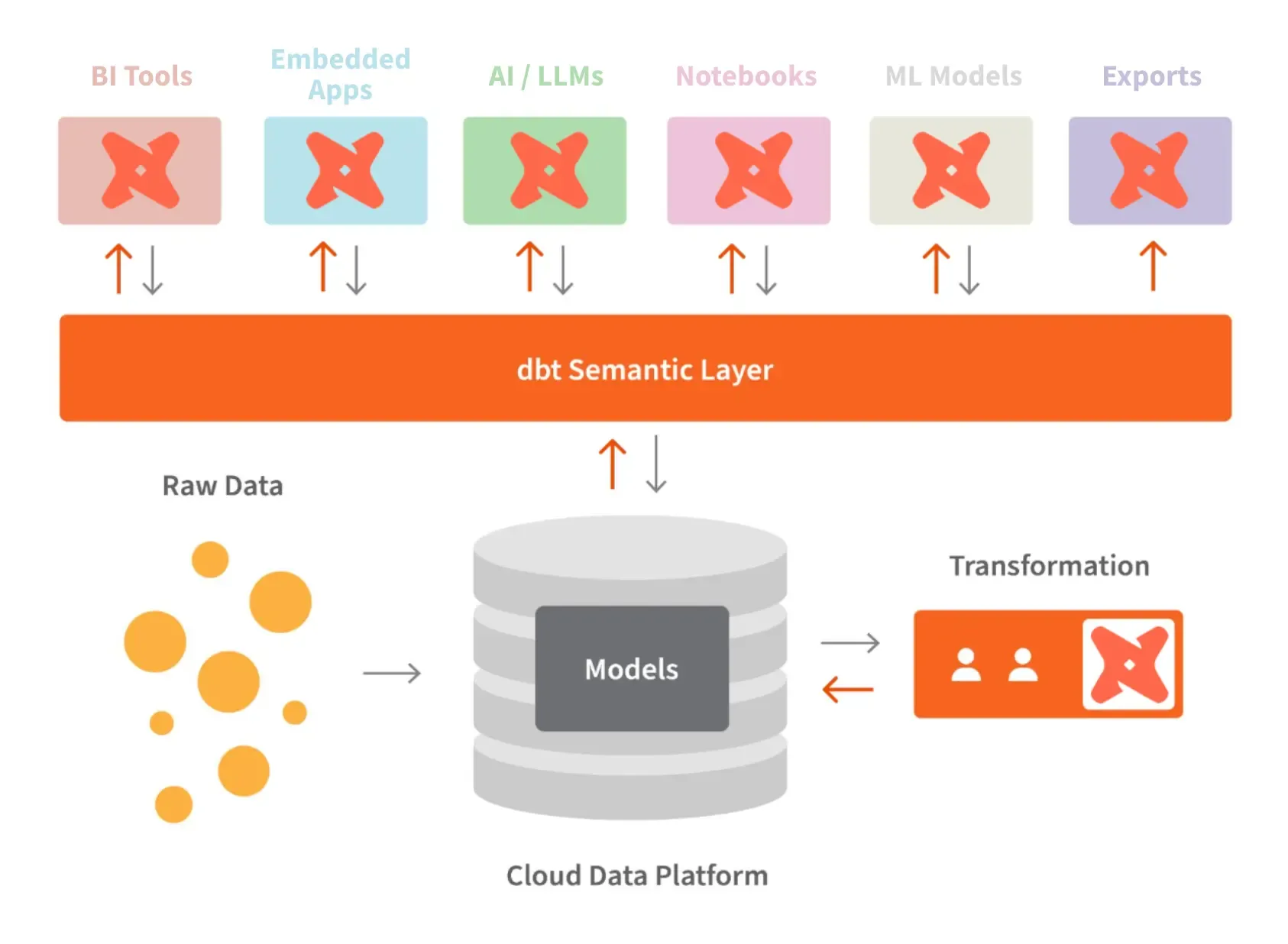
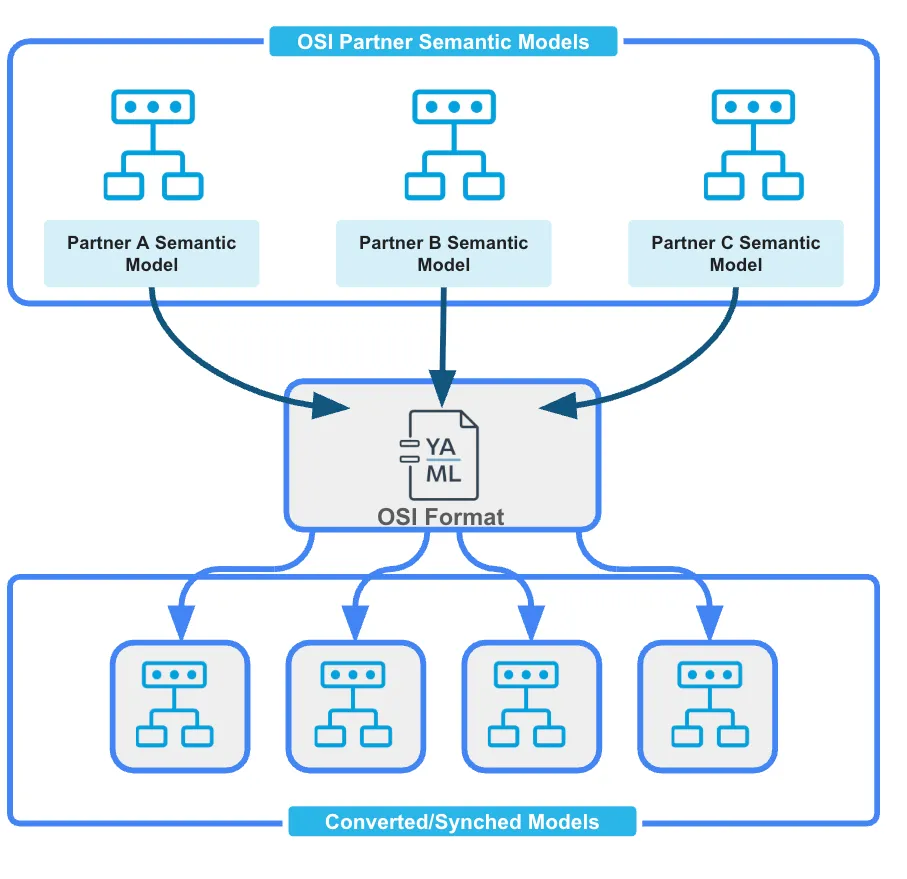
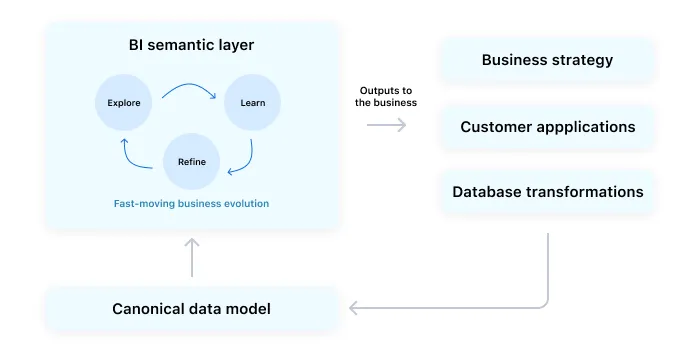
A semantic layer sits between your data warehouse and the tools that consume it. It defines business logic in one central, governed place: what “revenue” means, how “active customers” is calculated, which dimensions apply to which metrics.
Instead of every analyst, every BI report, and every AI agent re-implementing the same calculations independently (and getting different answers), the semantic layer acts as the single source of truth for what your data means.
In the AI era, this matters more than ever. LLMs don't inherently know what your business terms mean. A semantic layer gives them something to ground against, turning vague prompts into accurate, governed queries.